

As a supplier of twin screw extruders, I often get asked about the types of motors commonly used in these machines. It's a crucial question because the motor is the heart of the twin screw extruder, dictating its performance, efficiency, and overall functionality. In this blog, I'll share some insights into the motors typically employed in twin screw extruders.
AC Induction Motors
AC induction motors are a popular choice for twin screw extruders. They're known for their reliability and simplicity. These motors work on the principle of electromagnetic induction. When an alternating current is applied to the stator windings, it creates a rotating magnetic field. This field then induces a current in the rotor, causing it to rotate.
One of the main advantages of AC induction motors is their robustness. They can handle heavy loads and operate continuously for long periods without much maintenance. They're also relatively inexpensive compared to some other types of motors. This makes them a cost - effective option for many twin screw extruder applications.
However, AC induction motors do have some limitations. They have a fixed speed determined by the frequency of the power supply. While variable frequency drives (VFDs) can be used to adjust the speed, this adds to the cost. Also, their starting torque might not be as high as some other motor types, which could be a problem in applications where high starting torque is required.
DC Motors
DC motors have been used in twin screw extruders for a long time. They offer excellent speed control and high starting torque. DC motors work by using a direct current to create a magnetic field in the stator and rotor. The interaction between these magnetic fields causes the motor to rotate.
The ability to precisely control the speed of a DC motor is a major advantage. This is particularly useful in twin screw extruders where different processing speeds might be required for different materials or products. For example, when extruding a high - viscosity material, a slower speed might be needed to ensure proper mixing and extrusion.
On the downside, DC motors require more maintenance compared to AC induction motors. They have brushes that need to be replaced periodically, and the commutator can wear out over time. Also, DC power supplies can be more complex and expensive to set up.
Servo Motors
Servo motors are becoming increasingly popular in twin screw extruders. These motors are highly precise and offer excellent dynamic performance. They work in a closed - loop system, where the motor's position, speed, and torque are continuously monitored and adjusted.

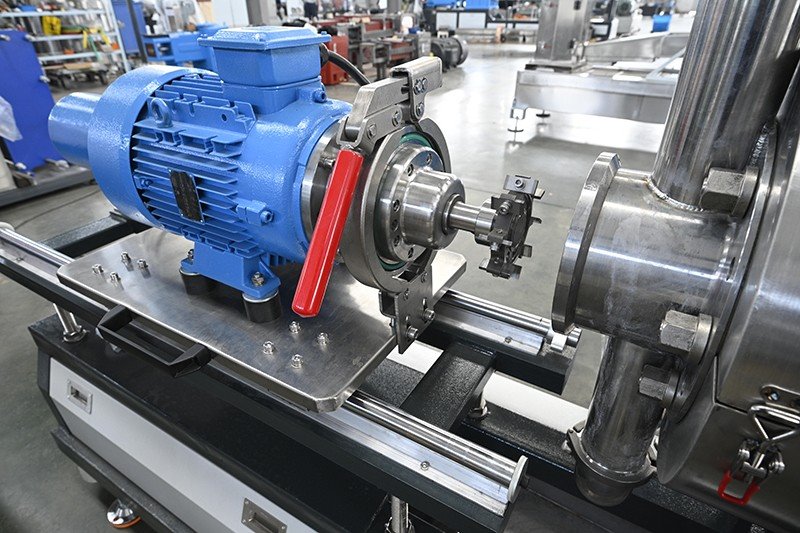
Servo motors can respond very quickly to changes in the control signal. This makes them ideal for applications where precise control of the extrusion process is required. For example, in the production of high - quality plastic products, servo motors can ensure that the extrusion speed and pressure are maintained at the desired levels.
However, servo motors are more expensive than AC induction and DC motors. They also require more sophisticated control systems, which can add to the overall cost of the twin screw extruder.
Permanent Magnet Synchronous Motors (PMSM)
Permanent magnet synchronous motors are another option for twin screw extruders. These motors use permanent magnets in the rotor, which eliminates the need for rotor windings. This results in higher efficiency and better power density compared to other motor types.
PMSM motors offer smooth operation and high torque at low speeds. They're also more energy - efficient, which can lead to significant cost savings in the long run. However, like servo motors, they require advanced control systems, and the cost of the permanent magnets can be relatively high.
Choosing the Right Motor
When choosing a motor for a twin screw extruder, several factors need to be considered. The first is the power requirements of the extruder. This depends on the size of the extruder, the type of material being processed, and the desired production rate. For example, a larger extruder processing high - viscosity materials will require a more powerful motor.
The speed control requirements are also important. If precise speed control is needed, a servo motor or a DC motor with a good control system might be the best choice. On the other hand, if cost is a major concern and a fixed - speed operation is sufficient, an AC induction motor could be a suitable option.
Maintenance is another factor to consider. Some motors, like DC motors, require more frequent maintenance, which can increase the operating costs over time. So, it's important to balance the initial cost of the motor with the long - term maintenance requirements.
Our Product Range
As a twin screw extruder supplier, we offer a wide range of twin screw extruders equipped with different types of motors to meet the diverse needs of our customers. For example, our Twin Screw Water Ring Granulator is designed to work efficiently with various motor types, ensuring high - quality granulation. Our Twin Screw Underwater Granulator also offers excellent performance with the right motor selection. And if you're looking for a PVC Twin Screw Extruder, we have options that can be customized with the appropriate motor for your PVC processing needs.
Conclusion
In conclusion, the choice of motor for a twin screw extruder depends on several factors, including power requirements, speed control, and maintenance. Each type of motor has its own advantages and disadvantages, and the right choice will depend on the specific needs of your application.
If you're in the market for a twin screw extruder and need help choosing the right motor, don't hesitate to contact us. We're here to assist you in making the best decision for your business. Whether you need a high - performance servo motor for precise control or a cost - effective AC induction motor, we can provide you with the right solution.
References
- "Handbook of Plastic Extrusion Technology" by Allan A. Griff.
- "Extrusion of Polymers: Theory and Practice" by John A. Brydson.